Kingsway Junior School
Personal, Social, Health and Economic (PSHE) and Relationships and Sex education (RSE)
Personal, Social, Health and Economic (PSHE) education helps pupils develop the knowledge, skills and attributes they need to thrive both now and in the future. At Kingsway, we use PSHE to support children in building the character, confidence, resilience, wellbeing and understanding required for life beyond school in modern Britain.
Our PSHE provision uses the JIGSAW programme as a planning tool, supporting structured and progressive learning across all year groups. It also aligns with the expectations of the National Curriculum, ensuring pupils receive high-quality teaching in key areas such as wellbeing, relationships, and personal safety. Most importantly, our teaching is agile, allowing us to respond to incidents and themes that are relevant and pertinent to our children.
For further details of what pupils will be covering throughout the year, please refer to our curriculum overview. PSHE is also embedded within our weekly assembly themes, which are revisited in class twice a week and form the basis of class assemblies.
Kingsway Junior School has recently been awarded the Hertfordshire Wellbeing Award for Anti-Bullying, recognising the strong promotion of health and wellbeing across the curriculum, the school environment and the wider community. The school has also achieved the Bronze Award for Rights Respecting Schools and is currently working towards Silver status.
Below are some quotes taken from the Validation visit:
The pupils at Kingsway are strong advocates for the quality work of the school. They emphasised the importance of the pupil pledge that is said in assembly three times a week, which includes the importance of three key components for all anti-abuse work: self-belief, respect and kindness toward others.
Pupils spoke with confidence about the way the school teaches them anti-bullying and anti-prejudice, and they recognised that it is the choices that they make every day in their relationships with others that determines the anti-bullying and anti-prejudice climate of the school.
The school invests high status in pupil voice. Pupil voice is enhanced and valued by pupils contributing articles to the school newsletters. Pupil survey data in May 2019 found that 100% of pupils felt safe in school.
Curriculum opportunities for learning around respect, kindness, anti-bullying and anti-prejudice are maximised.
The PSHE resources they experience are representative of diverse groups and the school has also accessed useful resources through the curriculum and the Educate Against Hate website to further enhance their curriculum work for respecting and valuing diversity.
Parent/carer engagement is a priority for the school. The new “Positive Relationships in School” policy is a quality document that provides helpful information to parents/carers. This is further supported by a parent/carer leaflet that provides helpful and practical advice when pupils are distressed about relationships at school.
The school’s work under the Wellbeing Quality Mark has been seen as a key whole school priority.
What will my child learn?
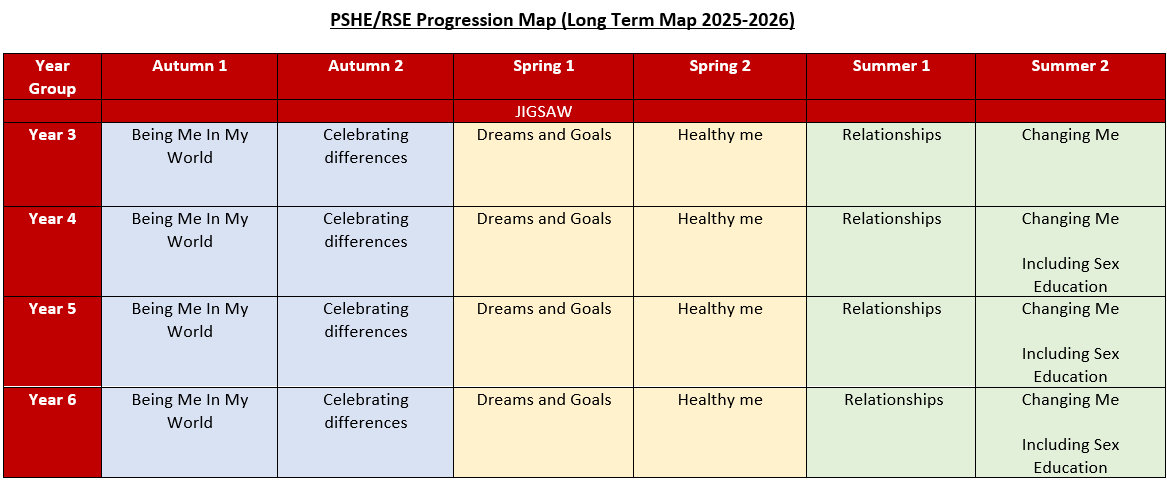
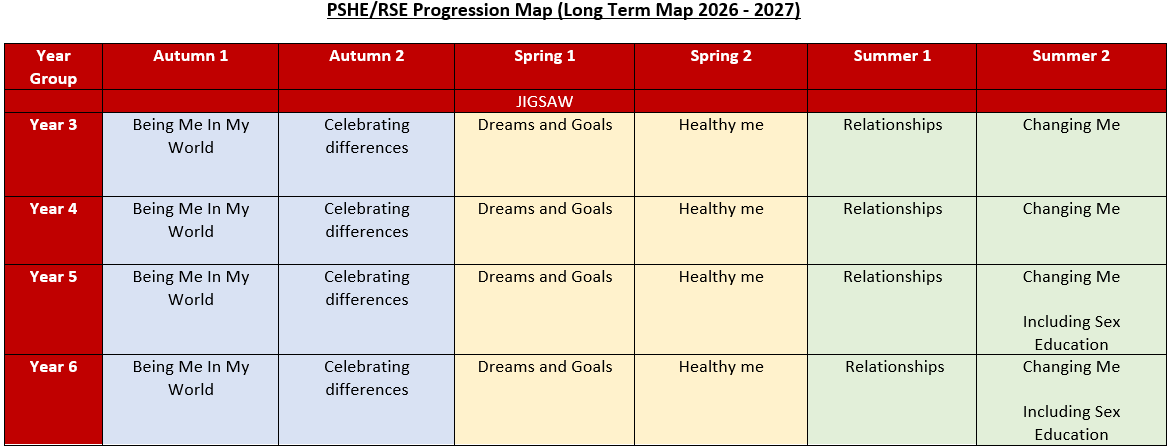
From September 2026, Relationships, Sex and Health Education (RSHE) will be updated in line with the new statutory curriculum requirements. Our school is currently reviewing and updating our RSHE policy and curriculum content to ensure that teaching remains age-appropriate, inclusive and supportive of pupils’ wellbeing. Further information and updates will be shared on the school website and communicated through school once the revised policy has been finalised.
Parents are invited to a consultation meeting at the school on Friday 22nd May, where we will share details of the new RSHE framework, outline what will be taught at each stage and provide an opportunity for you to ask questions and share your views. We will be discussing the key changes to the statutory curriculum and share resources with you to give a transparent and comprehensive picture of what we are planning to teach in which year groups.
Parents and carers who would like to view the RSHE teaching materials are welcome to do so. Please contact the school office to request access details and an individual access code. In line with copyright and data protection requirements, parents will also be asked to sign a confidentiality agreement before materials are shared.